RESEARCH
Inorganic and Organometallic Chemistry
bring a NEW CHEMICAL REACTIVITY BY CONTROLLING AND UTILIZING REACTIVE INTERMEDIATES
The Hwang group uses synthetic inorganic and organometallic chemistry to develop new catalytic methods for energy delivery, storage and recycling. We develop interdisciplinary approaches to tackle unsolved problems in catalysis and sustainable chemistry. Particular emphases will be placed on the rational design of catalysts utilized by photo- and electro-chemistry, which will allow for selective conversion of readily available small molecules into highly value-added commodity chemicals via clean and sustainable reaction routes.
Area of particular interest include:
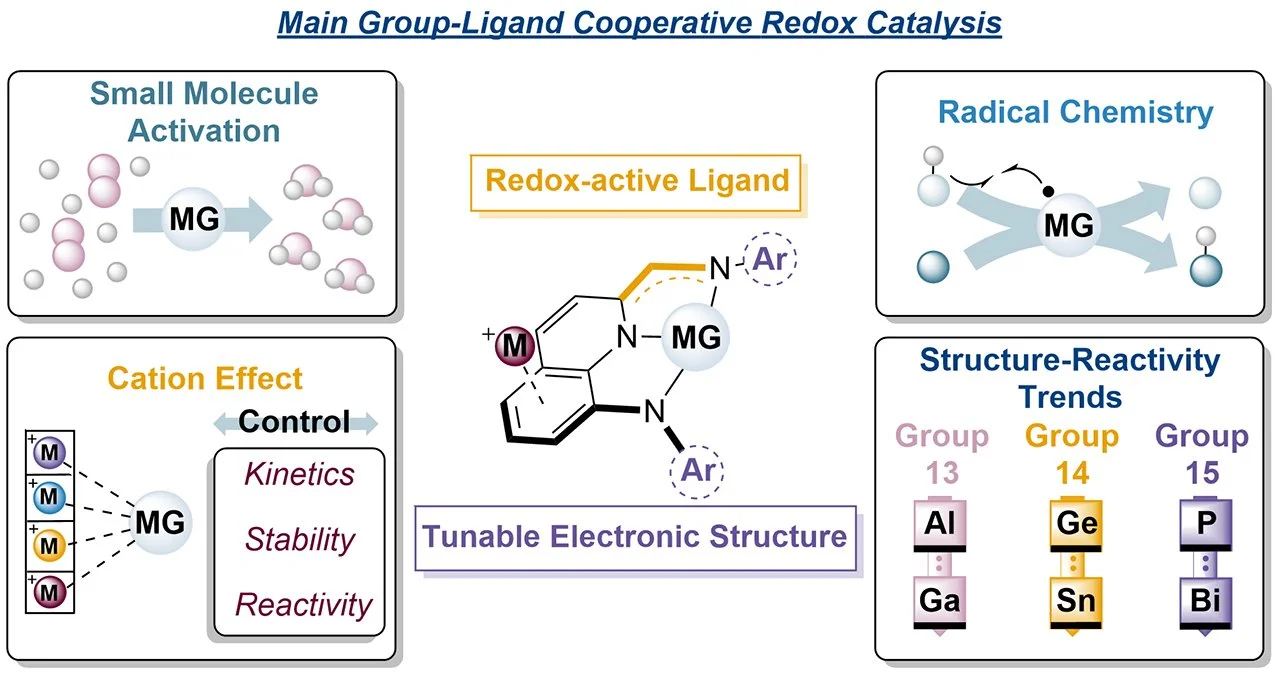
Project 1: Main Group Catalysts for Bioinspired Small Molecule Activation
Enzymatic systems activate small molecules such as O₂, CO₂, and C–H bonds under mild conditions with remarkable efficiency. Traditional approaches to mimicking these transformations have relied on transition metal complexes that recreate the coordination environments of metalloenzyme active sites. Our research takes a fundamentally different approach by developing main group element-based catalysts that replicate the essential reactivity of metalloenzymes while offering unique advantages, including earth abundance, low toxicity, and versatile bonding capabilities. By strategically exploiting counterion effects and orthogonal orbital interactions, we design catalytic systems for CO₂, N–H, and C–H activation that go beyond structural mimicry to achieve functional equivalence with enzymatic catalysis.
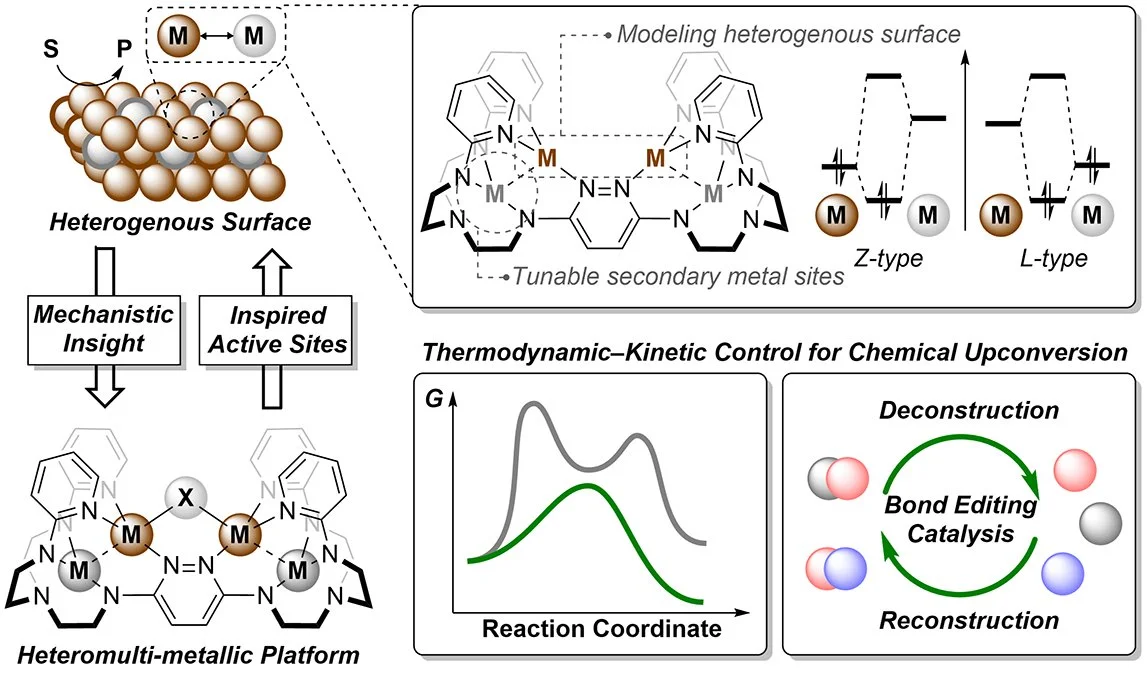
Project 2: Molecular Models of Heterogeneous Catalysts for Mechanistic Discovery
Heterogeneous catalysts drive critical industrial processes, yet their inherent complexity creates barriers to mechanistic understanding and rational design. Key reactive intermediates remain difficult to characterize, limiting catalyst optimization to empirical approaches. Our research constructs well-defined homogeneous model systems that capture the essential features of heterogeneous catalysts, enabling direct structural and spectroscopic characterization of fleeting intermediates. By bridging the gap between molecular-level insights and practical catalyst development, we aim to establish mechanistic blueprints that inform the design of next-generation heterogeneous catalytic systems for challenging small molecule transformations.
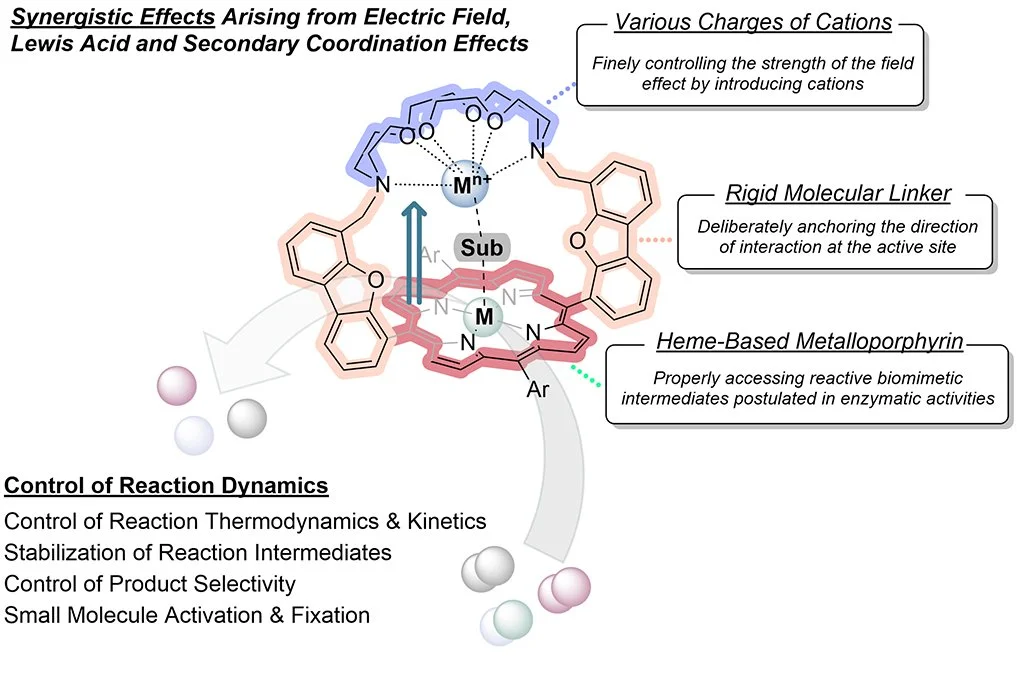
Project 3: Oriented Electric Fields for Selectivity Control in Transition Metal Catalysis
Local electric fields play a critical role in enzyme catalysis and heterogeneous processes, yet remain largely unexplored as a design tool in molecular catalysis. Our research harnesses oriented electric fields to control reaction selectivity and stabilize elusive intermediates in transition metal systems. By positioning catalysts within controllable electric fields, we achieve energetic differentiation of competing transition states based on their dipole characteristics, providing an orthogonal control dimension beyond conventional steric and electronic tuning. This approach aims to disrupt scaling relationships that constrain catalyst performance, direct oxidative selectivity, and enable access to previously inaccessible reactive intermediates.